
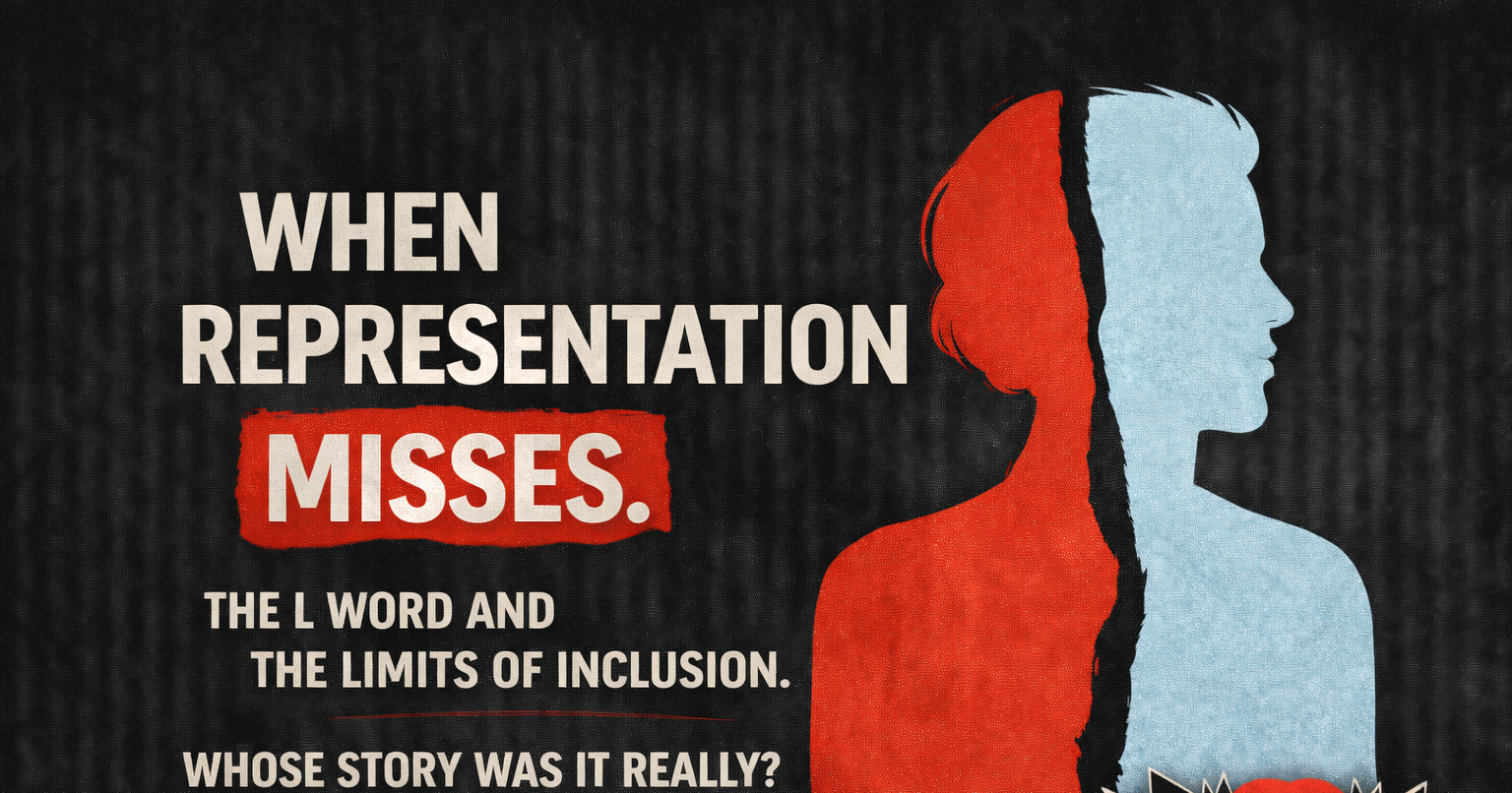
When The L Word premiered in 2004, it was groundbreaking television. It centred queer women at a time when lesbian and bisexual characters were either sidelined or sensationalised. So when the show introduced a transgender character in its third season, the intent appeared progressive—an attempt to broaden the scope of queer representation. The character, Max Sweeney (introduced as Moira), was positioned as a sign that the series was evolving alongside the LGBTQ+ community. The intent and positioning were amicable. The outcome, however, was far more complicated. ## A Trans Character Framed Through a Lesbian Lens At its core, The L Word was always a show about lesbian identity, lesbian community, and lesbian desire. That focus was its strength. But it also became the framework through which Max’s transition was interpreted, filtered, and ultimately constrained. Rather than allowing Max to exist fully as a trans man with his own narrative centre, the show frequently situated his transition as a disruption to lesbian space.
His storyline was less about self-realisation and more about how his identity unsettled the women around him. The camera—and the emotional weight of the narrative—stayed with the cisgender lesbian characters as they grappled with discomfort, confusion, or resentment. In other words, Max’s transness was processed through a lesbian lens. The show asked, 'How does this affect us?’ Rather, who is he becoming? ## Transition as Betrayal One of the recurring undertones in Max’s storyline was the suggestion that his transition represented a kind of departure—or even betrayal—of lesbian identity. Characters framed his medical transition as assimilation into masculinity, into patriarchy, into the very structures the show had often positioned as oppressive. This framing unintentionally reinforced a harmful idea: that trans men are women who “leave” womanhood rather than people affirming their authentic gender. Instead of affirming transition as self-actualisation, the narrative often depicted it as loss—loss of lesbian community, loss of shared womanhood, and loss of political solidarity.
That framing may have reflected real tensions within early-2000s queer communities. But the show rarely interrogated those tensions critically. Instead, it often let them stand. ## Discomfort Without Accountability To its credit, the series did portray the awkwardness and ignorance that many cis people experience when someone close to them transitions. However, it frequently stopped short of challenging that ignorance. Misgendering, invasive questioning, and scepticism were portrayed as uncomfortable but understandable reactions rather than as behaviour requiring growth. Because the series did not consistently provide a counterbalancing trans perspective, the burden of adaptation fell disproportionately on Max. His anger and dysphoria were sometimes framed as volatility rather than understandable responses to marginalisation. In doing so, the show risked reinforcing stereotypes about trans instability. Authorship and Cultural Context It’s important to situate the show within its time. In the mid-2000s, mainstream television had little literacy around trans identities.
Showrunner Ilene Chaiken and the team behind the series were navigating terrain that was largely unexplored in scripted television, especially on a premium network like Showtime. The problem wasn’t malicious intent. It was epistemological framing. Because the creative core of the show centred on lesbian experience, the introduction of a trans man did not shift that centre. Instead, it absorbed him into it. The narrative never quite relinquished its original point of view. As a result, Max was treated less as an expansion of the show’s identity and more as an edge case within it. ## Representation Without Reframing True inclusion requires more than adding a character. It requires recalibrating the narrative gaze. The L Word expanded its cast but did not fully expand its lens. Max’s storyline exposed the limitations of a show attempting intersectional inclusion while still anchored in a singular identity framework. The series wanted to be inclusive of trans experiences, but it did not always decenter lesbian subjectivity enough to let that experience stand independently. This tension is why the portrayal still sparks debate. It wasn’t simply “bad representation". It was representation constrained by perspective. ## A Legacy of Imperfect Progress Despite its flaws, the show opened doors. It forced conversations in living rooms and online forums at a time when few mainstream series would even attempt a trans narrative. That matters. But good intentions do not guarantee good outcomes.
By introducing a trans character without fully reorienting the storytelling lens, The L Word demonstrated how inclusion can inadvertently replicate marginalisation—especially when new identities are filtered through the assumptions of an existing cultural framework. In hindsight, the lesson is clear: representation works best not when new characters are folded into old narratives, but when narratives themselves evolve to make room for new ways of seeing.
