
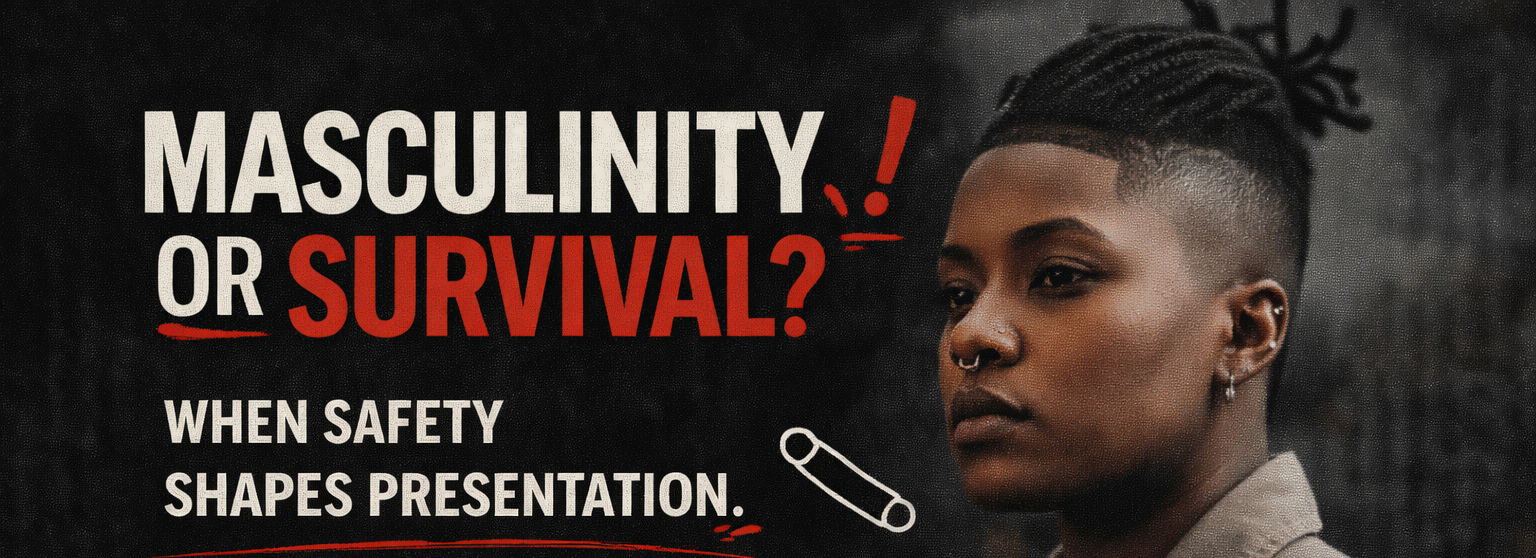
Masculine-presenting lesbians—often referred to as studs, butches, or masc women—occupy a complex and highly visible space within both LGBTQ+ communities and broader society. Their gender expression can challenge conventional expectations of femininity, drawing admiration from some and hostility from others. In this context, questions sometimes arise about whether adopting elements traditionally associated with men—whether in dress, demeanour, or social posture—serves as a strategy for safety. At the same time, this adaptation can carry the risk of internalizing aspects of toxic masculinity. Understanding this tension requires nuance, empathy, and a recognition of the social pressures at play.
Safety in a Gendered World
Public space is not neutral. Gender nonconformity often attracts scrutiny, harassment, or even violence. For masculine-presenting lesbians, visibility can increase vulnerability. In certain environments—particularly those shaped by rigid gender norms—adopting a more stereotypically “masculine” posture (such as projecting toughness, emotional restraint, or assertiveness) may function as a protective strategy.
This performance of masculinity can serve multiple purposes:
Deterrence: Projecting confidence or physical presence may discourage harassment.
Navigational clarity: In environments where gender is policed, a clear masculine presentation can reduce intrusive questioning.
Community signalling: Within queer spaces, masculinity may be a way of affirming identity and belonging.
Importantly, these adaptations are often responses to external conditions—not inherent traits or aspirations to “be men.” They are shaped by a society that frequently equates masculinity with authority and physical safety.
The Slippery Edge of Toxic Masculinity
However, masculinity as it is socially constructed comes with cultural baggage. “Toxic masculinity” refers not to masculinity itself, but to harmful norms attached to it—such as emotional suppression, dominance, aggression, or the devaluation of vulnerability. When individuals adopt masculine-coded behaviours for safety or identity affirmation, there can be a subtle risk of absorbing these harmful norms.
This risk is not unique to masculine-presenting lesbians; it affects anyone navigating gender expectations. But for those whose identity is already politicised, the pressure can be compounded:
Emotional restriction: Feeling the need to appear stoic or invulnerable may limit healthy emotional expression.
Relational dynamics: Replicating heteronormative gender roles within queer relationships can unconsciously reproduce power imbalances.
Community expectations: In some spaces, studs or butches may be expected to “play the protector,” reinforcing rigid binaries.
It is crucial to avoid framing this as a moral failing. Rather, it is a reflection of how deeply gender norms are embedded in society. When survival strategies overlap with dominant cultural scripts, boundaries can blur.
The Difference Between Expression and Emulation
Masculine presentation is not inherently toxic. Clothing, speech patterns, physicality, or leadership traits do not belong exclusively to men. Many masculine-presenting lesbians experience their expression as authentic, joyful, and liberating—not as imitation.
The key distinction lies in intention and awareness:
Authentic expression emerges from self-understanding and comfort.
Defensive emulation may arise from fear, threat, or social pressure.
Both can coexist. A person can genuinely enjoy masculinity while also recognizing that certain behaviors are reinforced by a desire to stay safe. The presence of toxic masculinity is not inevitable; it becomes relevant only when harmful norms go unexamined.
Structural Roots of the Problem
The deeper issue is not that masculine-presenting lesbians adopt traits associated with men. It is that society rewards and protects masculinity while punishing femininity and queerness. When power and safety are disproportionately granted to those who embody dominant masculine norms, marginalized people may feel compelled to approximate those norms.
Addressing the problem requires structural change:
Challenging rigid gender binaries.
Expanding cultural definitions of strength to include vulnerability and empathy.
Reducing violence and harassment toward gender-nonconforming people.
Encouraging diverse models of queer identity that are not bound by heteronormative scripts.
Toward Conscious Masculinity
Rather than urging masculine-presenting lesbians to reject masculinity or fully embrace it uncritically, a more constructive approach is conscious engagement. This means asking:
Which aspects of masculinity feel authentic and affirming?
Which behaviors are rooted in fear or external pressure?
How can strength coexist with emotional openness?
How can protection avoid becoming control?
Masculinity, when detached from dominance and emotional repression, can be expansive and life-affirming. It can include protectiveness without possessiveness, confidence without aggression, and resilience without silence.
Conclusion
Masculine-presenting lesbians navigate a world that both scrutinizes and stereotypes them. Adopting elements of masculinity can be a rational strategy for safety and self-expression. Yet the cultural shadow of toxic masculinity makes critical reflection essential.
The goal is not to police identity or prescribe how anyone should present. It is to recognize the pressures that shape gender expression and to create a society where no one feels compelled to perform strength for survival. In that world, masculinity—like femininity—would be a choice, not a shield.
