
I Kissed a Girl (often abbreviated as IKAG) is a British reality dating show that premiered on BBC Three and BBC iPlayer in 2024. Hosted by Dannii Minogue, the series brings together ten queer women — lesbian and bisexual — to explore romantic connections in a villa in Italy. It’s structured like popular dating shows but is unique in being devoted exclusively to sapphic relationships.
The show marked a notable moment: it was one of the first mainstream British reality formats centred on queer women’s romance, reaching high levels of engagement among under-35 audiences.
Representation That Resonates
1. Visibility on a Main Stage
Representation matters — people from under-represented sexualities and genders seeing themselves reflected in mainstream media can be powerful. IKAG’s presence on the BBC brought queer women into living rooms and streams across the UK and beyond in a way most dating shows have not.
Contestants shared stories of receiving messages from fans who felt empowered to embrace their identities, including people who felt inspired to come out to family members. One participant said that seeing someone “like me” on TV helped them realise that they could be bold about their own identity.
Impact on Broader Conversations
2. Challenging Stereotypes and Normalising Queer Experiences
By focusing on authentic queer relationships without sensationalising participants as caricatures, IKAG helped challenge long-standing media stereotypes about LGBTQ+ people. A queer creator involved with the show described its portrayal as “real and deep,” emphasising genuine emotions and community connections that resonate with many viewers.
This is a significant shift from how queer people, especially women, have often been portrayed historically in media — either erased or reduced to stereotypes.
The Power and Limits of Visibility
While many clapped the show for its positive impact, reactions within the queer community weren’t uniform.
3. Nuanced Discussions Within the Community
Some queer viewers and commentators pointed out that representation in entertainment still carries complexities. There were discussions — for example around cast editing choices — about whether certain narratives fully reflected the diversity and depth of queer experiences, especially for people of colour.
These conversations echo broader media critiques: visibility is important, but how stories are told matters just as much. Tokenistic or simplified portrayals can reproduce old biases even while increasing representation.
Cultural and Social Significance
4. Opening Up Space in Reality TV
IKAG’s success — including high viewership and acquisitions by other networks — suggests there’s a real hunger for queer storytelling in mainstream formats. The producer noted that LGBTQ+ women served in significant production roles, and contestants had input into how their experiences were portrayed.
That can help shift industry norms, prompting other shows and formats to be more inclusive.
What This Means for the Queer Community
Empowerment through visibility: Seeing queer women and relationships represented can affirm personal identity and reduce feelings of isolation.
Broader cultural conversations: IKAG has encouraged discussion not just about dating but about queer identity, labels, community norms, and diversity within LGBTQ+ experiences.
Industry impact: The show’s popularity may influence future casting practices and the development of more inclusive media.
In a media environment where queer stories have too often been sidelined, I Kissed a Girl stands as a culturally significant moment — one that underscores both how far representation has come and how much further the community wants to go toward fuller, richer portrayals of queer lives.
If you’d like, I can also explore how audiences in specific regions (e.g., the UK vs. internationally) reacted to the show or compare IKAG’s impact with other queer-focused media – just let me know!
Rewrite the article to highlight the lack of black representation
Here is a rewritten version of the article with a stronger focus on the lack of Black representation and the conversations it sparked within the queer community:
I Kissed a Girl and the Question of Black Representation
When I Kissed a Girl (IKAG) premiered on BBC Three in 2024, it was widely celebrated as a landmark moment for queer women’s visibility on mainstream television. Hosted by Dannii Minogue, the reality dating show brought together lesbian and bisexual women in a romantic villa setting — a format long dominated by heterosexual couples.
For many viewers, the show represented progress. But within the queer community — particularly among Black queer women — the celebration was more complicated.
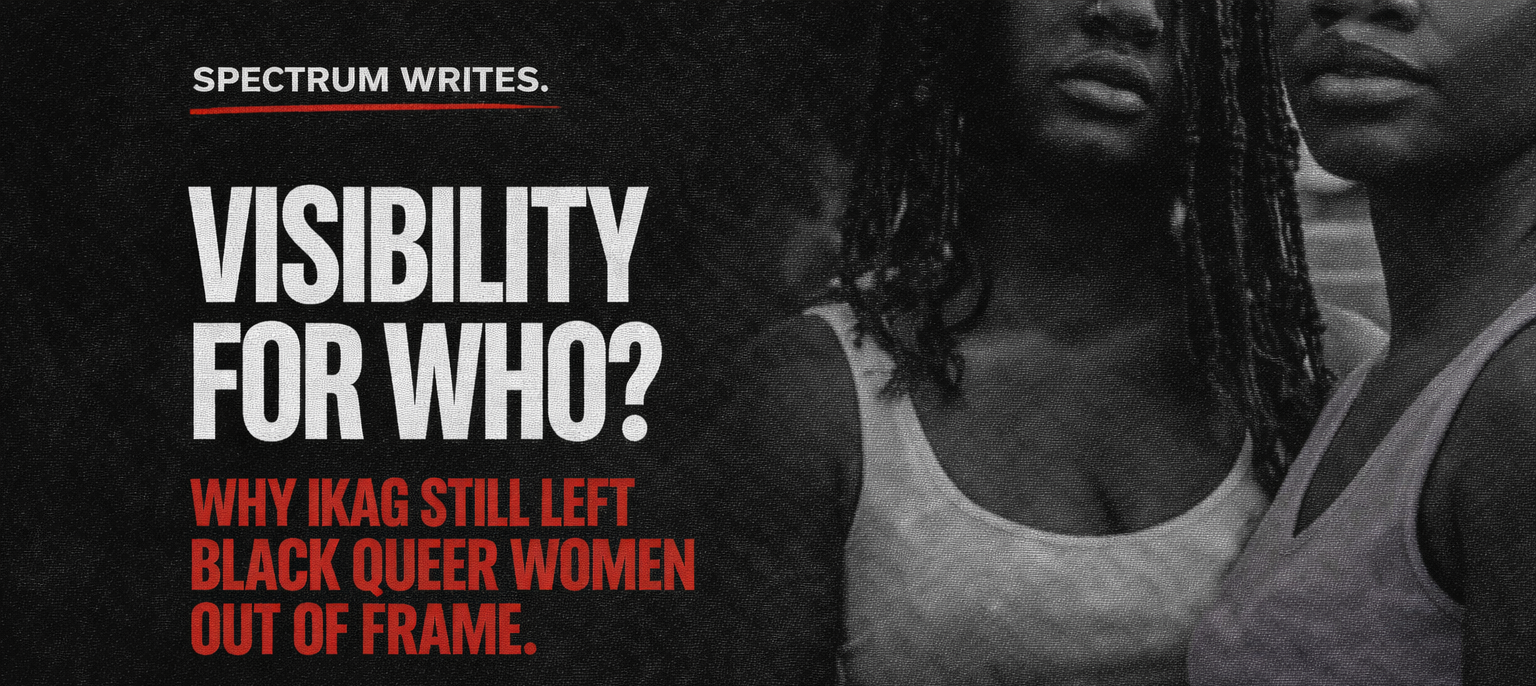
Visibility — But for Whom?
At first glance, IKAG marked a breakthrough. Queer women were finally centered in a glossy, prime-time dating format. However, critics and viewers quickly raised concerns about the show’s racial representation.
While the cast included some racial diversity, Black women were noticeably underrepresented — especially considering the UK’s multicultural population and the vibrancy of Black queer communities. More importantly, the limited presence of Black contestants sparked deeper questions:
Were Black queer women fully included in the casting process?
Were their stories given equal narrative weight?
Did editing and screen time reflect the diversity the show claimed to celebrate?
Representation is not just about numbers — it is about visibility, voice, and narrative importance.
The Marginalisation of Black Queer Women in Media
The concerns surrounding IKAG echo a long-standing issue in both LGBTQ+ and mainstream media: Black queer women often exist at the margins.
Historically, queer media representation has skewed toward white, cisgender, conventionally attractive participants. Even in supposedly inclusive formats, Black women can be:
Cast in smaller numbers
Given less screen time
Framed through stereotypical editing
Positioned as secondary to dominant storylines
For Black queer viewers, this dynamic can feel familiar. The promise of groundbreaking representation rings hollow when intersectionality — the overlapping realities of race, gender, and sexuality — is not meaningfully addressed.
Community Reactions and Critiques
Within online spaces and community discussions, some Black viewers expressed disappointment. While grateful to see queer women centered at all, they questioned whether the show truly reflected the breadth of queer Britain.
Several recurring critiques emerged:
Tokenism vs. meaningful inclusion
Having one or two Black contestants does not automatically create equitable representation if their romantic arcs or personalities are not fully developed.
Desirability politics
Reality dating shows often reveal unspoken racial biases in attraction. When Black women receive fewer romantic advances or less screen focus, it can reinforce harmful societal narratives about desirability.
Editing and storytelling
Reality TV is heavily edited. If Black contestants’ complexity is not highlighted, audiences are left with partial or flattened portrayals.
These conversations reflect broader frustrations about how intersectional identities are treated in media — even in LGBTQ+ spaces that position themselves as progressive.
Why This Matters Beyond One Show
IKAG’s cultural significance cannot be denied. It opened doors for queer women in mainstream British reality TV and signaled demand for sapphic-centered programming.
But representation without intersectionality risks replicating hierarchies within the queer community itself.
Black queer women face compounded marginalisation:
Racism in wider society
Homophobia and biphobia
Underrepresentation in LGBTQ+ media
Erasure within feminist and queer narratives
When a major show has the opportunity to amplify diverse voices and falls short, it highlights how much further media still needs to go.
The Bigger Conversation
The conversation sparked by IKAG is not about dismissing its achievements. It is about asking for more.
True inclusivity means:
Diverse casting across race, body type, class, and gender expression
Equal narrative investment in all contestants
Awareness of racial dynamics in dating formats
Production teams that reflect the communities portrayed
For Black queer women, visibility must be more than symbolic. It must be substantive.
IKAG may be a milestone in queer television — but its reception shows that progress is not linear. Representation evolves, and audiences are increasingly attentive to who is centered, who is peripheral, and who is missing entirely.
